
When we uncork a bottle of wine today, we are participating in a ritual that spans nearly 8,000 years. Long before modern temperature-controlled stainless steel tanks, automated bottling lines, or Sommelier certifications existed, ancient civilizations were already decoding the science and art of fermented grape juice.
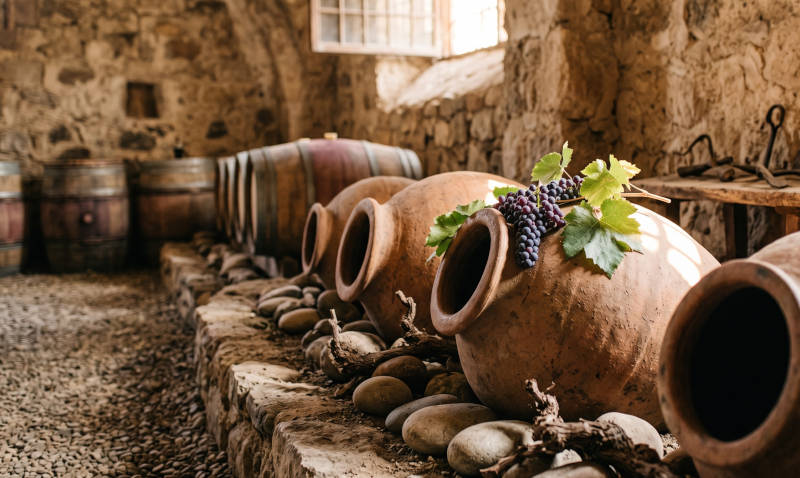
Archaeological digs in modern-day Georgia, Armenia, and Zagros region of Iran have unearthed qvevri—massive terracotta jars buried underground to age wine—dating back as far as 6000 BCE. To these ancient cultures, wine was far more than a drink; it was medicine, trade currency, and a divine link to the gods.
The Trade Routes that Shaped the Palate
As maritime trade flourished, the Phoenicians and ancient Greeks carried vines across the Mediterranean basin, planting rootstocks in what we now know as Italy, Spain, and Southern France. The Romans later perfected barrel aging and glassblowing, realizing that oxygen control was the key to longevity and nuance in flavor.
Every major European region famous for winemaking today owes its foundation to these early trade networks. When you sip a vintage today, you aren’t just tasting local soil—you’re tasting centuries of human migration, agricultural innovation, and cultural trade that literally shaped the Western world.